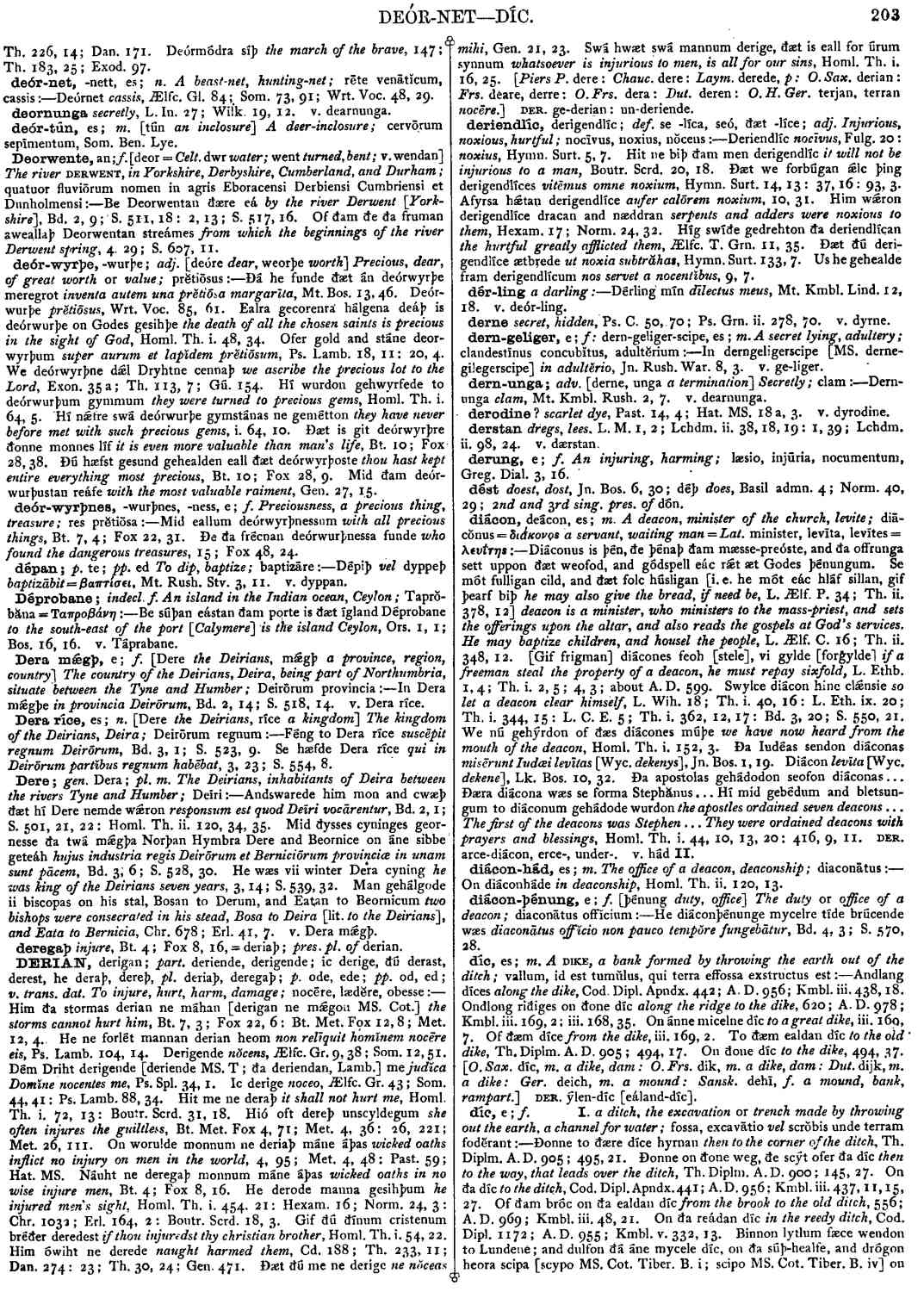
díc
- noun [ masculinefeminine ]
-
Ðonne to ðære díce hyrnan
then to the corner of the ditch,
- Th. Diplm. A. D. 905 ;
- 495, 21.
-
Ðonne on ðone weg, ðe scýt ofer ða díc
then to the way, that leads over the ditch,
- Th. Diplm. A. D. 900 ;
- 145, 27.
-
On ða díc
to the ditch,
- Cod. Dipl. Apndx. 441 ;
- A. D. 956 ;
- Kmbl. iii. 437, 11, 15, 27.
-
Of ðam bróc on ða ealdan díc
from the brook to the old ditch,
- 556 ;
- A. D. 969 ;
- Kmbl. iii. 48, 21.
-
On ða reádan díc
in the reedy ditch,
- Cod. Dipl. 1172 ;
- A. D. 955 ;
- Kmbl. v. 332. 13 .
-
Binnon lytlum fæce wendon to Lundene; and dulfon ðá áne mycele díc, on ða súþ-healfe, and drógon heora scipa [scypo MS. Cot. Tiber. B. i; scipo MS. Cot. Tiber. B. iv] onwest-healfe ðære brycge
within a little space they went to London; and they then dug a great ditch, on the south side, and dragged their ships to the west side of the bridge,
- Chr. 1016 ;
- Th. 281, 4-7, col. 1 .
-
Ymbútan ðone weall [Babilónes] is se mǽsta díc, on ðam is yrnende se ungefóglecesta streám; and, wiðútan ðam díce, is geworht twegra elna heáh weall
round the wall [of Babylon] is a very great ditch, in which runs the deepest stream; and, outside the ditch, a wall is built two ells high,
- Ors. 2, 4;
- Bos. 44, 26, 27.
Bosworth, Joseph. “díc.” In An Anglo-Saxon Dictionary Online, edited by Thomas Northcote Toller, Christ Sean, and Ondřej Tichy. Prague: Faculty of Arts, Charles University, 2014. https://bosworthtoller.com/7664.
Checked: 1