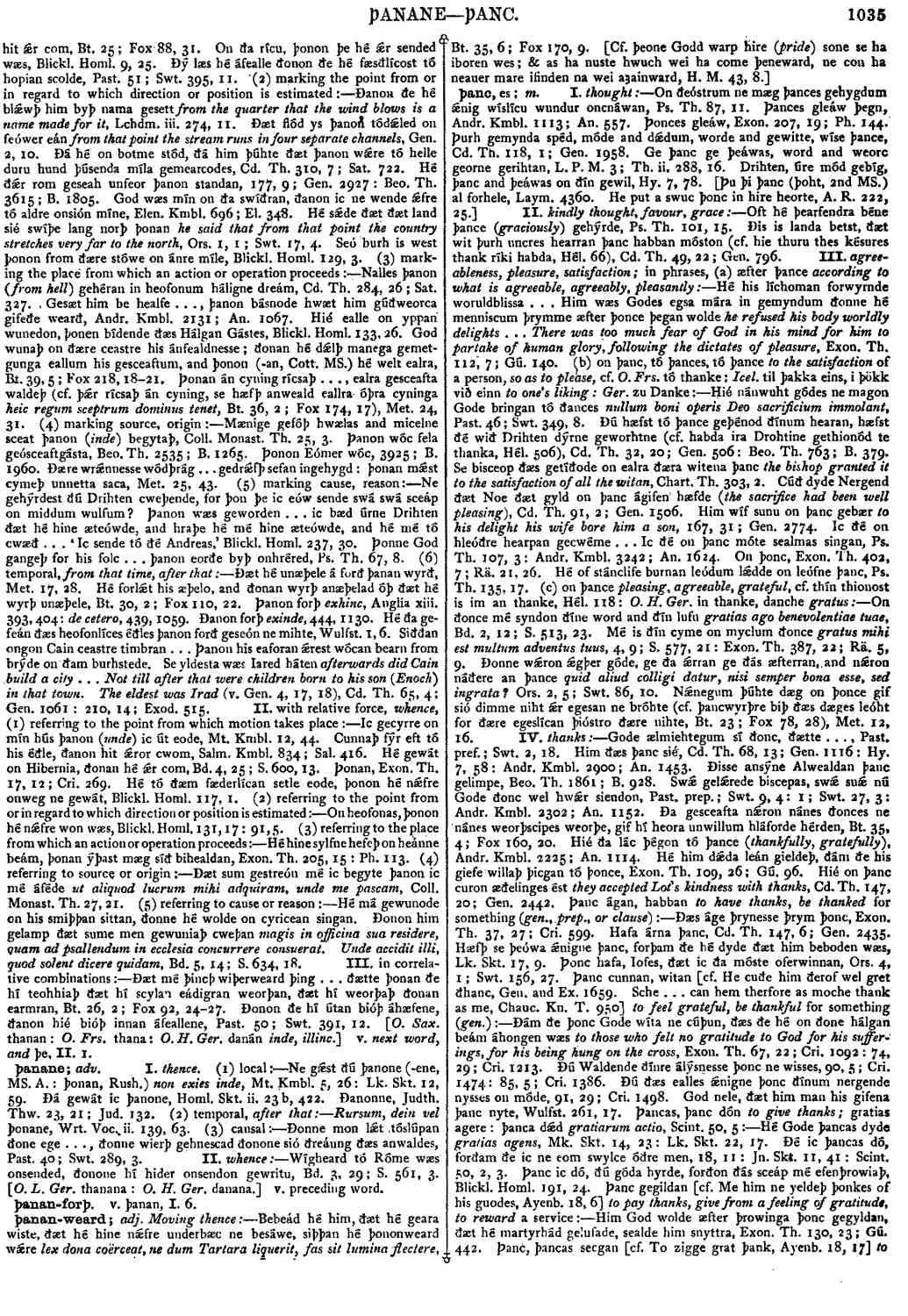
þanc
- noun [ masculine ]
-
On ðeóstrum ne mæg þances gehygdum ǽnig wíslícu wundur oncnáwan,
- Ps. Th. 87, 11.
-
Þances gleáw þegn,
- Andr. Kmbl. 1113; An. 557.
-
Þonces gleáw,
- Exon. 207, 19; Ph. 144.
-
Þurh gemynda spéd, móde and dǽdum, worde and gewitte, wíse þance,
- Cd. Th. 118, 1; Gen. 1958.
-
Ge þanc ge þeáwas, word and weorc georne gerihtan,
- L. P. M. 3; Th. ii. 288, 16.
-
Drihten, úre mód gebíg, þanc and þeáwas on ðín gewil,
- Hy. 7, 78.
- [Þu þi þanc (þoht, and MS.) al forhele,
- Laym. 4360.
-
He put a swuc þonc in hire heorte,
- A. R. 222, 25.
-
Oft hé þearfendra béne þance (
graciously
) gehýrde,- Ps. Th. 101,
15.
-
Ðis is landa betst, ðæt wit þurh uncres hearran þanc habban móston (cf. hie thuru thes késures thank ríki habda,
- Hél. 66), Cd. Th. 49, 22; Gen. 796.
-
Hé his líchoman forwyrnde woruldblissa . . . Him wæs Godes egsa mára in gemyndum ðonne hé menniscum þrymme æfter þonce þegan wolde
he refused his body worldly delights ... There was too much fear of God in his mind for him to partake of human glory, following the dictates of pleasure,
- Exon. Th. 112, 7; Gú. 140.
-
Hié nánwuht gódes ne magon Gode bringan tó ðances
nullum boni operis Deo sacrificium immolant,
- Past. 46; Swt. 349, 8.
-
Ðú hæfst tó þance geþénod ðínum hearan, hæfst ðé wið Drihten dýrne geworhtne (cf. habda ira Drohtine gethionód te thanka,
- Hél. 506), Cd. Th. 32, 20; Gen. 506 : Beo. Th. 763; B.
379.
-
Se bisceop ðæs getíðode on ealra ðæra witena þanc
the bishop granted it to the satisfaction of all the witan,
- Chart. Th. 303, 2.
-
Cúð dyde Nergend ðæt Noe ðæt gyld on þanc ágifen hæfde (
the sacrifice had been well pleasing
),- Cd. Th. 91, 2; Gen. 1506.
-
Him wíf sunu on þanc gebær
to his delight his wife bore him a son,
- 167, 31; Gen. 2774.
-
Ic ðé on hleóðre hearpan gecwéme . . . Ic ðé on þanc móte sealmas singan,
- Ps. Th. 107, 3 : Andr. Kmbl. 3242; An. 1624.
-
On þonc,
- Exon. Th. 402, 7; Rä. 21, 26.
-
Hé of stánclife burnan leódum lǽdde on leófne þanc,
- Ps. Th. 135, 17.
-
On ðonce mé syndon ðíne word and ðín lufu
gratias ago benevolentiae tuae,
- Bd. 2, 12; S. 513, 23.
-
Mé is ðín cyme on myclum ðonce
gratus mihi est multum adventus tuus,
- 4, 9; S. 577, 21 : Exon. Th. 387, 22; Rä. 5, 9.
-
Ðonne wǽron ǽgþer góde, ge ða ǽrran ge ðás æfterran, and nǽron náðere an þance
quid aliud colligi datur, nisi semper bona esse, sed ingrata?
- Ors. 2, 5; Swt. 86, 10.
-
Nǽnegum þúhte dæg on þonce gif sió dimme niht ǽr egesan ne bróhte (cf. þancwyrþre biþ ðæs dæges leóht for ðære egeslícan þióstro ðære nihte,
- Bt. 23; Fox 78, 28), Met. 12, 16.
-
Gode ælmiehtegum sí ðonc, ðætte . . . ,
- Past. pref.; Swt. 2, 18.
-
Him ðæs þanc sié,
- Cd. Th. 68, 13; Gen. 1116 : Hy. 7, 58 : Andr. Kmbl. 2900; An.
1453.
-
Ðisse ansýne Alwealdan þanc gelimpe,
- Beo. Th. 1861; B. 928.
-
Swǽ gelǽrede biscepas, swǽ suǽ nú Gode ðonc wel hwǽr siendon,
- Past, prep. ; Swt. 9, 4 : 1; Swt. 27, 3 : Andr. Kmbl. 2302; An.
1152.
-
Ða gesceafta nǽron nánes ðonces ne nánes weorþscipes weorþe, gif hí heora unwillum hláforde hérden,
- Bt. 35, 4; Fox 160, 20.
-
Hié ða lác þégon tó þance (
thankfully, gratefully
),- Andr.
Kmbl. 2225; An. 1114.
-
Hé him dǽda leán gieldeþ, ðám ðe his giefe willaþ þicgan tó þonce,
- Exon. Th. 109, 26; Gú. 96.
-
Hié on þanc curon æðelinges ést
they accepted Lot's kindness with thanks,
- Cd. Th. 147, 20; Gen. 2442.
-
Þanc ágan, habban
to have thanks, be thanked for something (gen., prep., or clause )
:-- Ðæs áge þrynesse þrym þonc,- Exon. Th. 37, 27; Cri. 599.
-
Hafa árna þanc,
- Cd. Th. 147, 6; Gen. 2435.
-
Hæfþ se þeówa ǽnigne þanc, forþam ðe hé dyde ðæt him beboden wæs,
- Lk. Skt. 17, 9.
-
Þonc hafa,
Iofes, ðæt ic ða móste oferwinnan, Ors. 4, 1; Swt. 156, 27. -
Þanc cunnan, witan [cf. He cuðe him ðerof wel gret ðhanc,
- Gen. and Ex. 1659.
-
Sche ... can hem therfore as moche thank as me, Chauc. Kn. T. 950] to feel grateful, be thankful for something (gen.) :-- Ðám ðe þonc Gode wíta ne cúþun, ðæs ðe hé on ðone hálgan beám áhongen wæs
to those who felt no gratitude to God for his sufferings, for his being hung on the cross,
- Exon. Th. 67, 22; Cri. 1092 : 74, 29; Cri. 1213.
-
Ðú Waldende ðínre álýsnesse þonc ne wisses,
- 90, 5; Cri. 1474 : 85, 5; Cri. 1386.
-
Ðú ðæs ealles ǽnigne þonc ðínum nergende nysses on móde,
- 91, 29; Cri. 1498.
-
God nele, ðæt him man his gifena þanc nyte,
- Wulfst. 261, 17.
-
Þancas, þanc dón to give thanks; gratias agere : þanca dǽd gratiarum actio, Scint. 50, 5 :-- Hé Gode þancas dyde
gratias agens,
- Mk. Skt. 14, 23 : Lk. Skt. 22, 17.
-
Ðé ic þances dó, forðam ðe ic ne eom swylce óðre men,
- 18, 11 : Jn. Skt. 11, 41 : Scint. 50, 2, 3.
-
Þanc ic dó, ðú góda hyrde, forðon ðás sceáp mé efenþrowiaþ,
- Blickl. Homl. 191, 24.
-
Þanc gegildan [cf. Me him ne yeldeþ þonkes of his guodes,
- Ayenb. 18, 6
to pay thanks, give from a feeling of gratitude, to reward a service
:-- Him God wolde æfter þrowinga þonc gegyldan, ðæt hé martyrhád gelufade, sealde him snyttra,- Exon. Th. 130, 23; Gú. 442.
-
Þanc, þancas secgan [cf. To zigge grat þank,
- Ayenb. 18, 17
to express thanks for something (gen., prep. clause), give thanks :-- Hé Gode his góda ðanc sægde (gratias agebat ),
- Bd. 3, 12; S. 537. 26 : Cd. Th. 16, 4; Gen. 238 : Andr, Kmbl. 2937;
An. 1471 : Blickl. Homl. 103, 25 : 217, 34.
-
Ne sæcgaþ ús nénne þanc,
- Homl. Skt. i. 3, 332.
-
Saga écne þonc, ðæt ic his módor gewearþ,
- Exon. Th. 13, 28; Cri. 209.
-
Wé sculon simle secgan Gode ðoncas for eów,
- Past. 32; Swt. 213, 10.
- ¶ Þances, genitive, used alone or in combination with noun or pronoun, and having adverbial force (cf. O. L. Ger. thankis gratis : O. H. Ger. danches sponte, ultro, gratis).
-
Ðæt næs ná eówres þances ac þurh God
it was not thanks to you but by God's will;
non vestro consilio sed Dei voluntate,- Gen. 45, 8.
-
Sege mé hwæþer se ðín wela ðínes þances swá deóre seó ðe for his ágenre gecynde
tell me whether that wealth of thine is so precious thanks to thee or from its own nature,
- Bt. 13; Fox 38, 6.
-
Hié rícsedon næs ðeáh mínes ðonces
ipsi regnaverunt, et non ex me,
- Past. 1; Swt. 27, 14.
-
Godes þonces
by God's grace,
- Chr. 897; Erl. 94, 29 : 883; Erl. 83, 18.
-
Hé him hiera ðonces gestiéran ne meahte
he could not restrain himself from them (his vices) of his own accord,
- Past. 3; Swt. 35, 18.
-
Gewilde man hí tó rihte þances oþþe unþances
let them be compelled to right whether they will or no,
- L. Eth. ix. 40; Th. i; 348, 28.
-
Hé nam sume mid him, sume þances, sume unþances
he took some of them with him, some willingly, others against their will,
- Chr. 1066; Erl. 198, 36.
-
Ðá þancodon hý ðyses Gode and mé swýþe georne, and heom eall ðis swýþe wel lícode, and cwǽdon ðæt heora þances ðis on écnesse stande
they said that they approve of the arrangement remaining in perpetuity,
- Chart. Th. 117, 7.
-
Ágenes þances
sponte,
- Germ. 395, 64 : L. C. S. 75; Th. i. 416, 22.
-
Gif hwá þeóf geméte and hine his þances áweg lǽte búton hreáme
if any one come upon a thief and of his own accord let him get away without hue and cry,
- 29; Th. i. 392, 14.
-
Hwæþer ðe ðú hý forseó and ðínes ágenes þonces hí forléte búton sáre ðe ðú gebíde hwonne hí ðé sorgiendne forlétan
whether thou despise them and of thine own accord abandon them without a pang, or wait till the time comes when they abandon thee sorrowing,
- Bt. 8; Fox 26, 12 : 7, 2; Fox 18, 13.
-
Ðonne sió sául hire unðonces gebǽdd wierð ðæt yfel tó forlǽtanne ðæt hió ǽr hire ágnes ðonces gedyde,
- Past. 36; Swt. 251, 14. [Hi
-
Bluðeliche he wule herkieu þet þe preost him leið on; ah þenne þe preost hine hat aȝefen þa ehte þon monne þet hit er ahte, þet he nulle iheren his þonkes
he will not listen to that if he can help it,
- O. E. Homl. i. 31, 8.
-
Þe sulve mose hire þonkes wolde þe totose,
- O. and N. 70.
-
Lordschipe wol not his thonkes han no felaweschipe,
- Chauc. Kn. T. 768.
-
Ðú wéndest ðæt seó wyrd ðás woruld wende heore ágenes þonces búton Godes geþeahte and his þafunge
thou didst suppose that fate turned this world at her own pleasure without the counsel and consent of God,
- Bt. 5, 1; Fox 8, 31.
-
Gif se weorþscipe and se anweald ágnes ðonces gód wǽre,
- Bt. 16, 3; Fox 54, 9.
-
Se anweald his ágenes ðonces gód næs, ðá se gód næs ðe hé tó com,
- 16, 4; Fox 58, 19.
-
Wé biddaþ ðé ðæt ðú hit ús ðínes fæder þances forgife
we pray thee to forgive us it for thy father's sake,
- Gen. 50, 17.
-
Gedǽle hé ðæt wurð Godes þances
pretium Dei gratia distribuat,
- L. M. I. P. 43; Th. ii. 276, 23 : L. Pen. 14; Th. ii. 282, 11 : L.
E. I. 25; Th. ii. 422, 8, 9 : L. Ath. v. 8, 1; Th. i. 236, 8 : Wulfst. 238,
28 : Homl. Skt. i. 23, 200 : Lchdm. i. 400, 9.
-
Ic ann ðæs landes intó mynstre Sca Marian þances,
- Chart. Th. 558, 33.
-
Ungeniédde mid eówrum ágenum willan gé sculon ðencean for eówre heorde Godes ðonces nals na for fraceðlecum gestreónum
providentes non coacte, sed spontanee secundum Deum, neque turpis lucri gratia, sed voluntarie,
- Past. 18; Swt. 137, 20.
-
Hié ða miclan feorme þigedon Cristes þonces ðe hié ǽr þigedon deófla þonces,
- Ors. 6, 21; Swt. 272, 22-24.
Bosworth, Joseph. “þanc.” In An Anglo-Saxon Dictionary Online, edited by Thomas Northcote Toller, Christ Sean, and Ondřej Tichy. Prague: Faculty of Arts, Charles University, 2014. https://bosworthtoller.com/31517.
Checked: 0