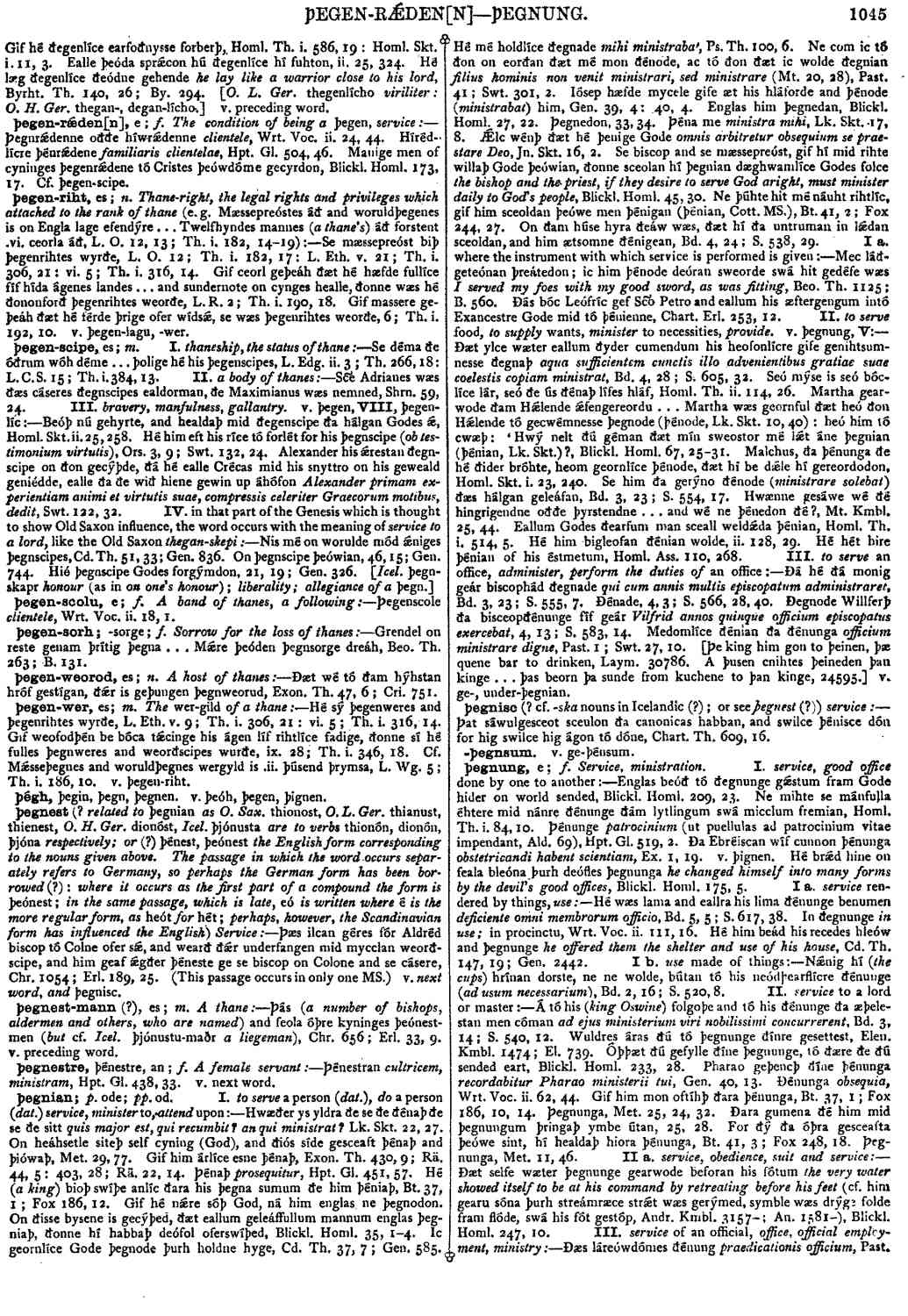
þegnung
- noun [ feminine ]
-
Englas beóð tó ðegnunge gǽstum fram Gode hider on world sended,
- Blickl. Homl. 209, 23.
-
Ne mihte se mánfulla éhtere mid nánre ðénunge ðám lytlingum swá micclum fremian,
- Homl. Th. i. 84, 10.
-
Þénunge
patrocinium
(ut puellulas ad patrocinium vitae impendant,- Ald. 69), Hpt. Gl. 519, 2.
-
Ða Ebréiscan wíf cunnon þénunga obstetricandi habent scientiam, Ex. 1, 19. v. þignen. Hé brǽd hine on feala bleóna þurh deófles þegnunga he changed himself into many forms by the devil's good offices, Blickl. Homl. 175, 5. I a. service rendered by things, use :-- Hé wæs lama and eallra his lima ðénunge benumen
deficiente omni membrorum officio,
- Bd. 5, 5; S. 617, 38.
-
In ðegnunge
in use;
in procinctu,- Wrt. Voc. ii.
111, 16.
-
Hé him beád his recedes hleów and þegnunge
he offered them the shelter and use of his house, Cd. Th. 147, 19; Gen. 2442. I b. use made of things :-- Nǽnig hí (the cups) hrínan dorste, ne ne wolde, bútan tó his neódþearflícre ðénunge (ad usum necessarium ),
- Bd. 2, 16; S. 520, 8.
-
Á tó his (king Oswine) folgoþe and tó his ðénunge ða æþelestan men cóman
ad ejus ministerium viri nobilissimi concurrerent,
- Bd. 3, 14; S. 540, 12.
-
Wuldres áras ðú tó þegnunge ðínre gesettest,
- Elen. Kmbl. 1474; El. 739.
-
Óþþæt ðú gefylle ðíne þegnunge, tó ðære ðe ðú sended eart,
- Blickl. Homl. 233, 28.
-
Pharao geþencþ ðíne þénunga
recordabitur Pharao ministerii tui,
- Gen. 40, 13.
-
Ðénunga
obsequia,
- Wrt. Voc. ii. 62, 44.
-
Gif him mon oftíhþ ðara þénunga,
- Bt. 37, 1; Fox 186, 10, 14.
-
Þegnunga,
- Met. 25, 24, 32.
-
Ðara gumena ðé him mid þegnungum þringaþ ymbe útan,
- 25, 28.
-
For ðý ða óþra gesceafta þeówe sint, hí healdaþ hiora þénunga,
- Bt. 41, 3; Fox 248, 18.
-
Þegnunga, Met. 11, 46. II a. service, obedience, suit and service :-- Ðæt selfe wæter þegnunge gearwode beforan his fótum
the very water showed itself to be at his command by retreating before his feet
(cf. him gearu sóna þurh streámræce strǽt wæs gerýmed, symble wæs drýge folde fram flóde, swá his fót gestóp,- Andr.
Kmbl. 3157-; An. 1581-), Blickl. Homl. 247, 10.
-
Ðæs láreówdómes ðénung
praedicationis officium,
- Past.7; Swt. 47, 20.
-
Hé wilnode ðære ðegnunga ðæs láriówdómes,
- Swt. 49, 15.
-
Ðære clǽnan ðegnenga ðæs sacerdhádes,
- Swt. 51, 2.
-
Gefyldum dagum his (St. Augustine) ðénunge
completis diebus officii sui,
- Bd. 2, 3; S. 505, 3.
-
Gif ðú wást ðæt ic unrihtlíce bisceopháde onfénge, ic lustlíce fram ðære ðéninge (
officio
) gewíte,- 4, 2; S. 566,
6.
-
Ic wæs gesett tó mínre þénunge (
officio;
office of cupbearer),- Gen.
41, 13.
-
Nǽnig sý beládod fram ðære kycenan þénunge
nullus excusetur a coquine officio,
- R. Ben. 58, 14.
-
Hé ðæs godspelleres þegnunga gefylde
he filled the office of evangelist,
- Blickl. Homl. 167, 9.
-
Ða eorðlícan hláfordas sint tó ðæm gesette ðæt hié ða endebyrdnesse and ða ðegnunga hiora hiórédum gebrytnige
terrenae domus dominus famulorunt ordines ministeriaque dispertiens,
- Past. 44; Swt. 319, 20.
-
Ðæt Leuies mǽgð stóde beforan him on þénunge, Deut. 10, 8. IV a. a service, an official performance, a service of religion, an office of the church, a ceremonial or ritual service :-- Þénung offcium, onsægung
immolatio,
- Wrt. Voc. i. 28, 48-49.
-
Þénunge
sacrificio,
- Hpt. Gl. 521, 70.
-
Ðis godspel belimpþ tó ðysses dæges ðénunge,
- Homl. Th. i. 104, 4.
-
Byrgincge þénuncge
sepulturae officio,
Anglia xiii.- 444, 1124.
-
Nǽnigum heora álýfed sí ǽnige sacerdlíce ðénunge dón
nulli eorum liceat ullum officium sacerdotale agere,
- Bd. 4, 5; S. 573, 4.
-
Ðæt gé ða ðénunge fulwihte (
ministerium baptizandi
) æfter ðeáwe ðære hálgan Rómániscan cyricean gefyllan,- 2, 2; S. 503, 21.
-
Ða clǽnan þénunga
lauta (supernarum) munia (rerum,
- Ald. 144), Wrt. Voc. ii. 90, 9: 52, 51.
-
Ðegnange
munia,
- 91, 32.
-
Þénunge,
- 57, 8.
-
Ðá his þénunga dagas (
dies officii eius
) gefyllede wǽron,- Lk. Skt. 1, 23.
-
Þénungum
culturis, ministeriis,
- Hpt. Gl. 495, 27.
-
Mænigfealdum þénungun exequiis pluribus, Wrt. Voc. ii. 144, 79. IV b.
a service, the formulas used in a service
:-- Swíðe feáwa wǽron behionan Humbre ðe hiora ðéninga cúðen understondan,- Past. pref.; Swt. 3, 14.
-
Ðá Drihtnes þénung wæs gemacod
cena facta,
- Jn. Skt. 13, 2.
-
Hé árás fram his þénunge
surgit a cena,
4. -
Gearwa úre þénunga ðæt hig magon etan mid mé
instrue convivium, quoniam mecum sunt comesturi,
- Gen. 43, 16: Mt. Kmbl. 26, 17.
-
Ic wolde ðíne ðénunge sylf nú gearcian, gif ic mé mid féðunge ferian mihte,
- Homl. Th. ii. 134, 31.
-
Malchus hæfde mid him eáþelícan fódan, and com tó his geféran ... and ða eáðelícan þénunga ðe hé ðider bróhte heom þénode, ðæt hí be dǽle hí gereordodon,
- Homl. Skt. i. 23, 233-240.
-
Ðonne man fæste, ðonne dǽle man ða þénunga ðe man brúcan sceolde ealle Godes þearfan
when a man fasts, then let all the food that would have been used be distributed to the poor,
- L. P. M. 3; Th. ii. 286, 28.
-
Hé hét hire þénian of his ágenum þénungum and his éstmetum, ac heó nolde his sanda brúcan,
- Homl. Ass. 110, 269.
-
Seó hell and se ðeáð and heora árleásan þénunga wǽron áforhtode,
- Nic. 28; Thw. 16, 10.
Bosworth, Joseph. “þegnung.” In An Anglo-Saxon Dictionary Online, edited by Thomas Northcote Toller, Christ Sean, and Ondřej Tichy. Prague: Faculty of Arts, Charles University, 2014. https://bosworthtoller.com/31636.
Checked: 0