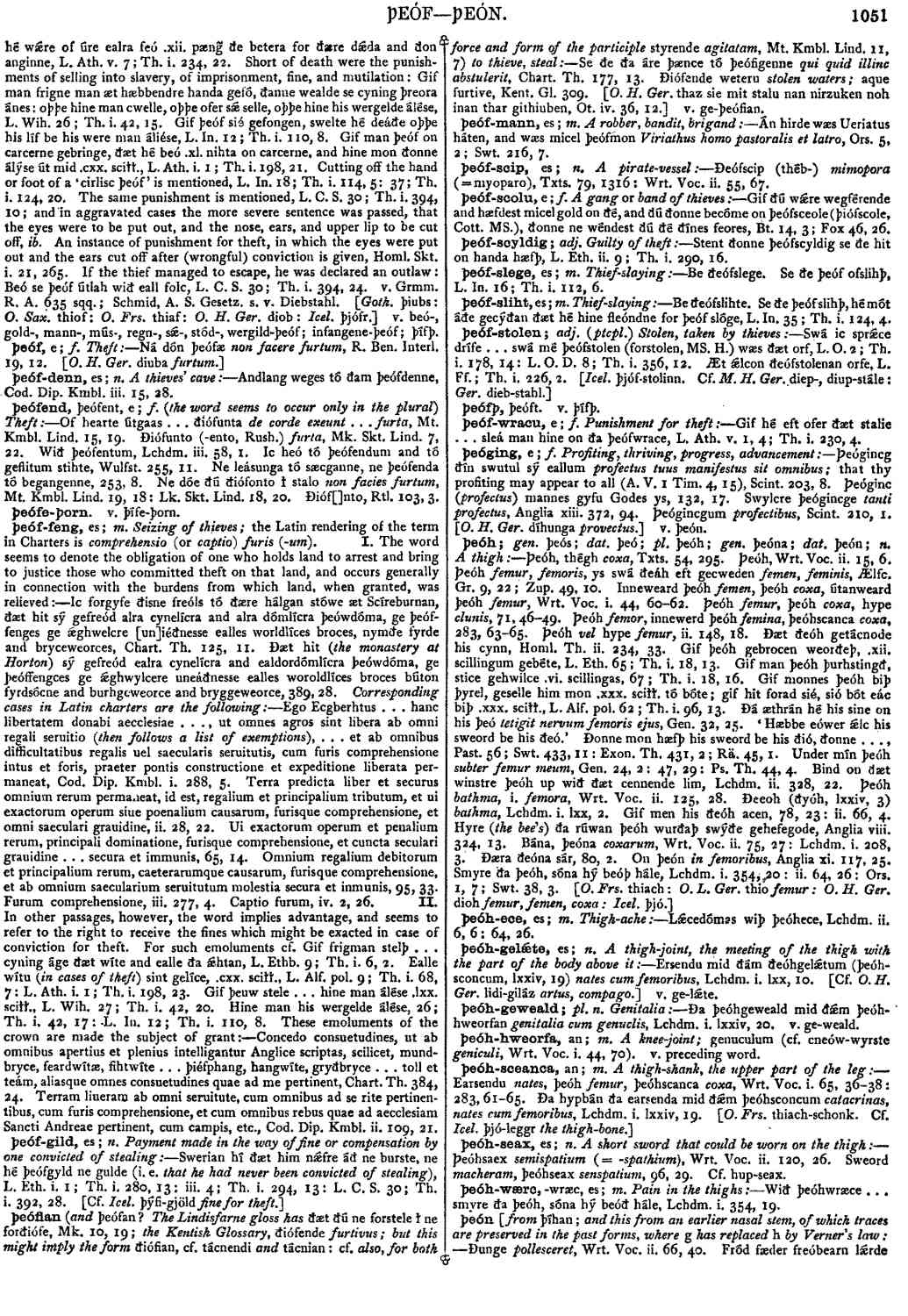
þeón
- verb [ strongcontracted ]
-
Þíhþ
cluit, pollet, viget, nobilitat,
- Wrt. Voc. ii. 131, 75.
-
Þáh
pubesceret,
- 66, 22.
-
Þeó
vigeat,
- Wülck. Gl. 257, 17.
-
Se his yldrum ðáh tó frófre
he grew up a comfort to his parents,
- Cd. Th. 67, 28; Gen. 1107.
-
Sunu weóx and ðáh,
- 138, 30; Gen. 2299.
-
Þág,
- 167, 25; Gen. 2771.
-
Ðæt cynn þeáh,
- Wulfst. 13, 11.
-
Heó ðurh mægðhád mǽrlíce þeáh,
- Homl. Skt. i. 2, 3.
-
Cnæplingc weóx ł þéh
puer pollesceret,
- Hpt. Gl. 466, 60.
-
Hyhtful vel ðíendi
indolis,
- Wrt. Voc. ii. 111, 54.
-
Þiónde,
- 45, 58.
-
Se gǽst þíhd in þeáwum,
- Exon. Th. 126, 10; Gú. 369.
-
Sume on ǽgþrum þeóþ
quidam in utrisque pollent,
- Scint. 221, 1.
-
Hé weóx under wolcnum, weorþmyntum þáh,
- Beo. Th. 16; B. 8.
-
Se Hǽlend þéáh on wísdóme and on ylde
Jesus proficiebat sapientia et aetate,
- Lk. Skt. 2, 52: Homl. Skt. i. 2, 23.
-
Þeáh hwá þeó on eallum welum and on eallum wlencum,
- Bt. 19; Fox 68, 31.
-
Þió,
- Met. 10, 28.
-
Ðeónde on cræftum
virtutibus pollens,
- Past. 9; Swt. 59, 11.
-
Ðiónde,
- Bt. 38, 5; Fox 206, 22.
-
Ðiiende on wæstum
proficiens incrementis,
- Rtl. 38, 41.
-
Monge lifgaþ gyltum forgiefene, nales Gode þígaþ,
- Exon. Th. 130, 3; Gú. 432.
-
Wǽron hálige sacerdas Gode ðeónde,
- Homl. Th. i. 544, 11.
-
Andgyt þýhð
sensus uiget,
- Scint. 52, 8.
-
Þýhð
(virginitatis gratia) adolescit,
- Hpt. Gl. 436, 67.
-
Ic þǽh óþþæt ic wæs yldra,
- Exon. Th. 485, 2; Rä, 71, 7.
-
Se síð ne þáh ðam ðe unrihte inne gehýdde wræote
the journey did not turn to the profit of him who unrighteously had hidden treasure within,
- Beo. Th. 6109; B. 3058: 5665; B. 2836.
-
Hine (him?) se cwealm ne þeáh,
- Exon. Th. 278, 30; Jul. 605.
-
Þeáh, bleów
(gratia) floruerit,
- Hpt. Gl. 441, 48.
-
His wæstmas genihtsumlíce þugon (
uberes fructus ager attulit,
- Lk. 12, 20), Homl. Th. ii. 104, 15.
- Se líchama þeónde on strangum breóste, on fullum limum and hálum, i. 614, 11.
-
Ðás wanunge getácnaþ se wanigenda dæg his (
John's) gebyrdtíde, and se ðeónda (increasing, lengthening )
dæg ðæs Hǽlendes ácennednysse gebícnaþ his ðeóndan mihte,- 358, 4.
-
Betweox óðrum mægenum bið ðeónde (ðiónde, Hatt. MS.) sió earnung ðæs geswenctan flǽsces
inter virtutes ceteras afflictae carnis meritum proficit,
- Past. 14; Swt. 86, 25: Hpt. Gl. 420, 37.
-
Þeónde
florentis (pudicitiae ),
- 511, 50.
Bosworth, Joseph. “þeón.” In An Anglo-Saxon Dictionary Online, edited by Thomas Northcote Toller, Christ Sean, and Ondřej Tichy. Prague: Faculty of Arts, Charles University, 2014. https://bosworthtoller.com/31740.
Checked: 0