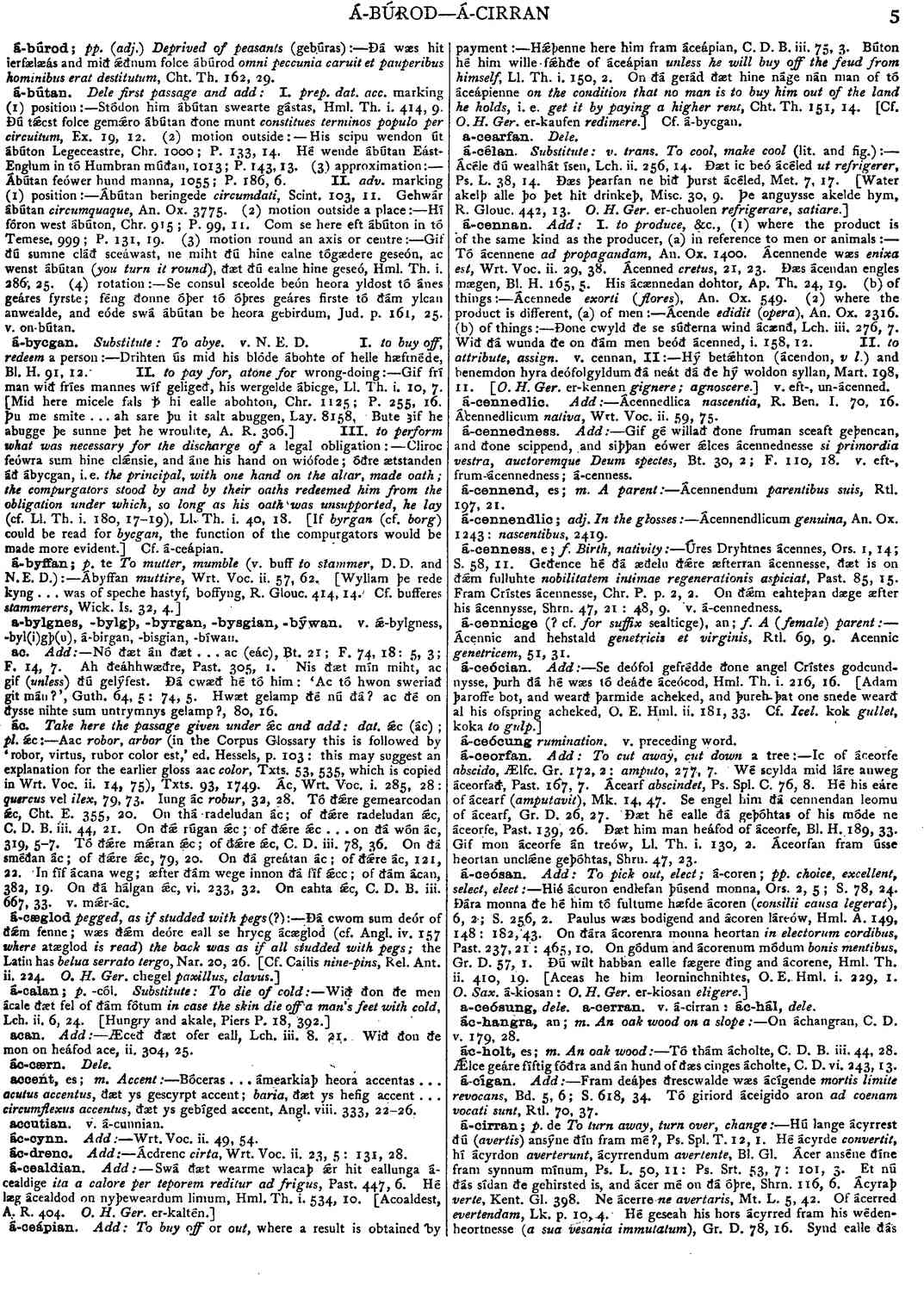
á-bycgan
Substitute: To abye. v. N. E. D.
to buy off, redeem a person
-
Drihten ús mid his blóde ábohte of helle hæftnéde,
- Bl. H. 91, 12.
to pay for, atone for wrong-doing
-
Gif frí man wið fríes mannes wíf geligeð, his wergelde ábicge,
- Ll. Th. i. 10, 7.
-
Þu me smite . . . ah sare þu it salt abuggen. Lay. 8158, Bute ȝif he abugge þe sunne þet he wrouhte,
- A. R. 306.
to perform what was necessary for the discharge of a legal obligation
-
Cliroc feówra sum hine clǽnsie, and áne his hand on wiófode; óðre ætstanden áð ábycgan, i. e.
the principal, with one hand on the altar, made oath; the compurgators stood by and by their oaths redeemed him from the obligation under which, so long as his oath was unsupported, he lay
(cf.- Ll. Th. i. 180, 17-19), Ll. Th. i. 40, 18.
- [If byrgan (cf. borg) could be read for bycgan,,] Cf. á-ceápian.
Entry information
Citation
Bosworth, Joseph. “á-bycgan.” In An Anglo-Saxon Dictionary Online, edited by Thomas Northcote Toller, Christ Sean, and Ondřej Tichy. Prague: Faculty of Arts, Charles University, 2014. https://bosworthtoller.com/37399.
Checked: 0